

Often humans learn from their mistakes, however when lessons are not picked up then history will keep repeating itself until consequences lead to solutions. History has recorded long periods of war and conquests in pursuit of territorial expansion. Territories were either annexed or ceded during this dark period of war and conquests. Whereas on one hand cession involved a bilateral treaty that surrendered territory, annexation on the other hand occurred when an aggressive state unilaterally acquired territory through occupation and thus declaring sovereignty over the seized territory.

Mongol empire for instance, was spread across Asia and eastern Europe through military conquests. Similarly, the British empire conquered territories through its naval campaigns to establish colonies and trade routes. Likewise, the Roman empire exerted military prowess over the Mediterranean region. Roman territory expanded to the of North Africa, Europe, and Asia. The Ottoman empire conducted countless military raids to expand its empire from the Balkan region across Asia to Africa. Moreover, Alexander the great commanded his armies to war and took control over a vast territory.
All these conquests are marked as great fetes in history, but the reality of such belligerent conquests was bloodbaths, loss of innocent lives and instability. Nevertheless, despite the disdainful results of ‘bello,’ humans still developed even better and more destructive arms for conflict! These lethal toys of destruction not only resulted into two world wars but also altered preexisting boundaries. What followed these baseless wars were countless excuses but the obvious motive behind all these unwarranted conflicts boiled down to territorial expansion.

The devastating effects of the second world war birthed an urge and desire for peace. Peace loving nations in the face of unwanted aftermath from belligerent acquisition of territory embarked on a plan to instil world peace. Peace loving states recognised the need for territorial integrity. Territorial integrity is an international law principle that prohibits violation of another state’s territory through aggression or military force. The result was United nations charter, a multilateral treaty with provisions on maintaining world peace.
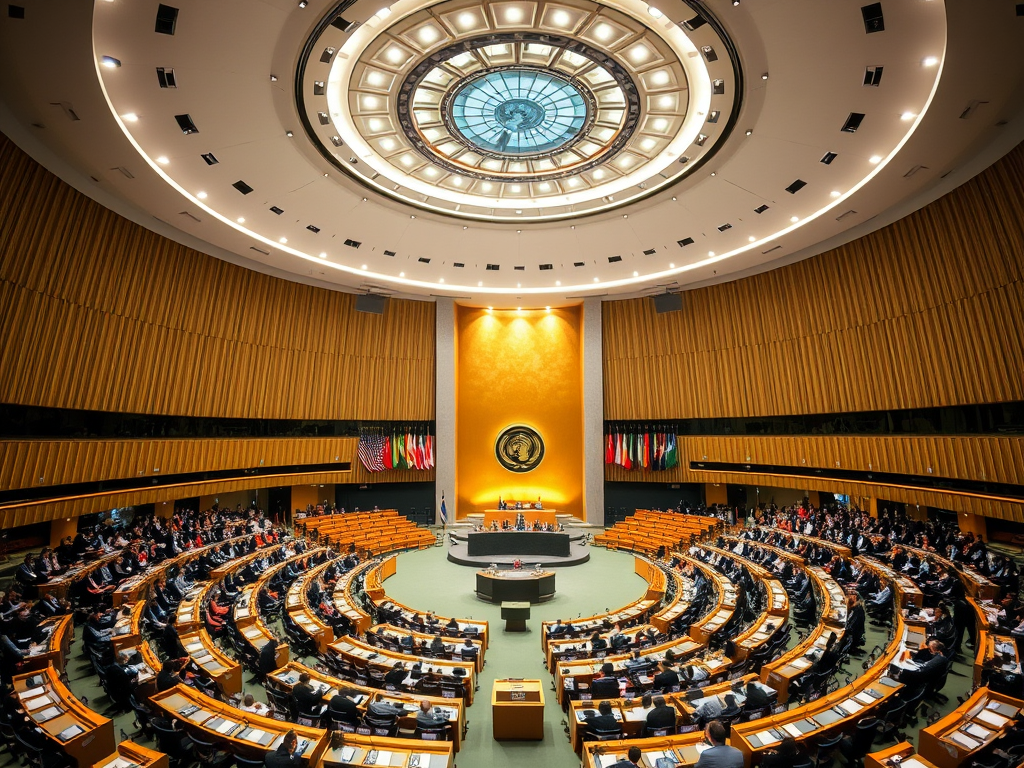
Article 1 of the United Nations charter outlines the purposes of United Nations. These purposes include:
- Maintaining international peace and security, take measures to prevent and remove threats to peace and supress acts of aggression;
- Develop friendly relations among nations based on principles of equal rights and self-determination of people; and
- Encourage international cooperation in solving international problems and promote respect for human rights.
In addition to the purposes listed above and in direct correlation to aggressive acquisition of territory, the charter under Article 2 provides for the following principles:
- Sovereign equality of all its members;
- Utmost good faith in fulfilling their international obligations under the charter;
- Peaceful settlement of international disputes;
- Refrain from the use of force on the territorial integrity or political independence of another state;
- Assist and cooperate with the United Nations when it is taking enforcement action;
- Conformity of non-member states to maintaining international peace and security; and
- Respect for domestic jurisdiction.
Aligned with the purpose of United Nations and the principles outlined under Article 2 of the United Nations charter is the international law principle of uti possidetis juris. Uti possidetis is a customary international law principle designed to avoid a state of unoccupied zone and unoccupied territories or rather terra nullius. The principle was majorly applied during the decolonization period where newly formed sovereign states inherited administrative borders that were mapped prior to their independence. The application of this principle not only aimed at preventing chaos and conflict over boundaries but also ensuring that sovereign powers desist from annexing new territory in the pretext of unoccupied land.
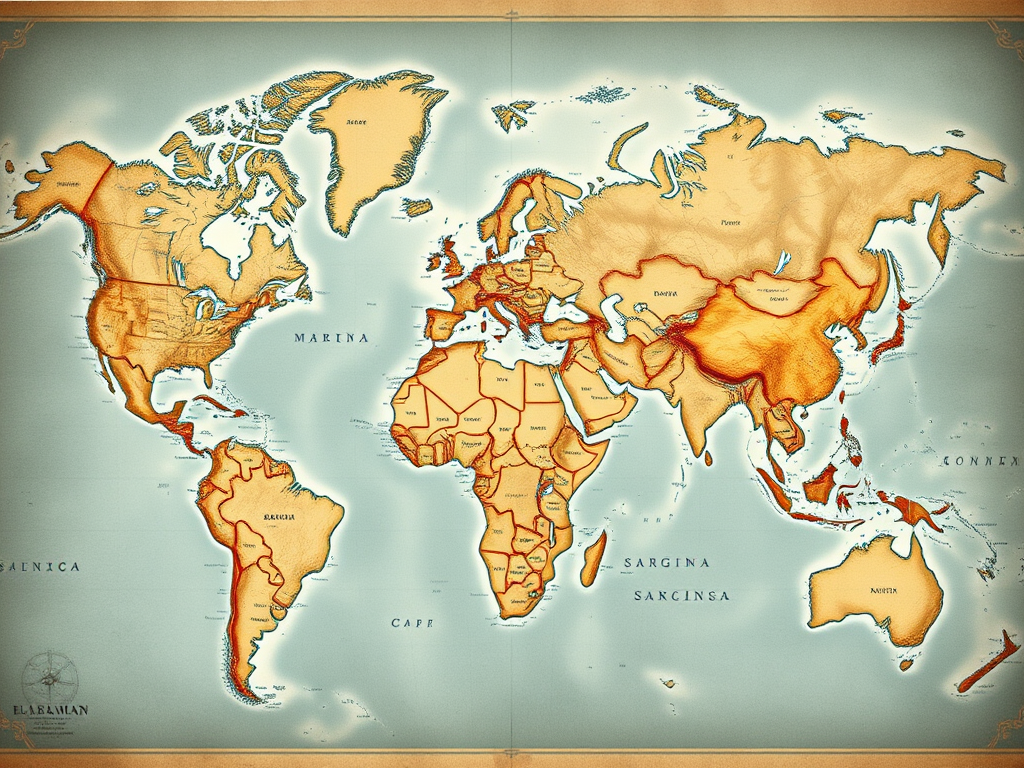
It is vital to note that independent states are at liberty to diverge from the customary norm of uti possidetis juris. Neighbouring states can agree to alter their boundaries or where a conflict ensues and escalates to an arbitral tribunal, the arbitral award can alter the boundary. In the present day and era, sovereign states can expand their territories through all other means available aside from aggressive annexation, conquest, and subjugation. The methods of territorial acquisition include:
- Cession – peaceful transfer or purchase of territory that is formalized through a treaty;
- Occupation of terra nullius or unoccupied territory thus establishing effective control and administration;
- Prescription- peaceful, open, unchallenged, and continuous possession of territory that originally belonged to another state and hence establishing sovereignty over it;
- Natural process i.e accretion.
The world stage has made tremendous progress in establishing global peace. Sanity and wisdom of brave leaders in combining efforts to create stability and international cooperation has borne the fruits of modern civilisation. Long periods of international peace promote both economic and social growth. Peace enables states to allocate well needed resources into health, education, and other relevant sectors of a country’s budget for sustainable development.

It is a shame to admit that global politics will always have a way of breeding corrupt leaders. These leaders are hellbent on disrupting peaceful coexistence. Regrettably, countries that enjoy veto powers in the United Nations security council are the in the frontlines of war. In 2014, Russia invaded Ukraine in raging battle that continues to destroy lives, infrastructure and impose instability for the two countries involved and in the rest of the world. The reason for such aggression and atrocities is the same old appetite for territorial expansion.

United States of America is another veto power of the United Nations Security Council that has in countless attempts failed to secure a cession treaty over the Danish territory of Greenland. Following these failed attempts on purchasing Greenland, the United States of America has hinted on using its military power to acquire the Danish territory of Greenland. As it goes in Proverbs 23:10, ‘do not remove an ancient boundary stone;’ and 22:28 ‘Remove not the old landmark’. Hope is that world leaders will heed the call of wisdom. However, when arrogance, pride, and greed rule instead then there are yet more lessons we can learn from dire consequences.
 Lawyer Online
Leave a comment